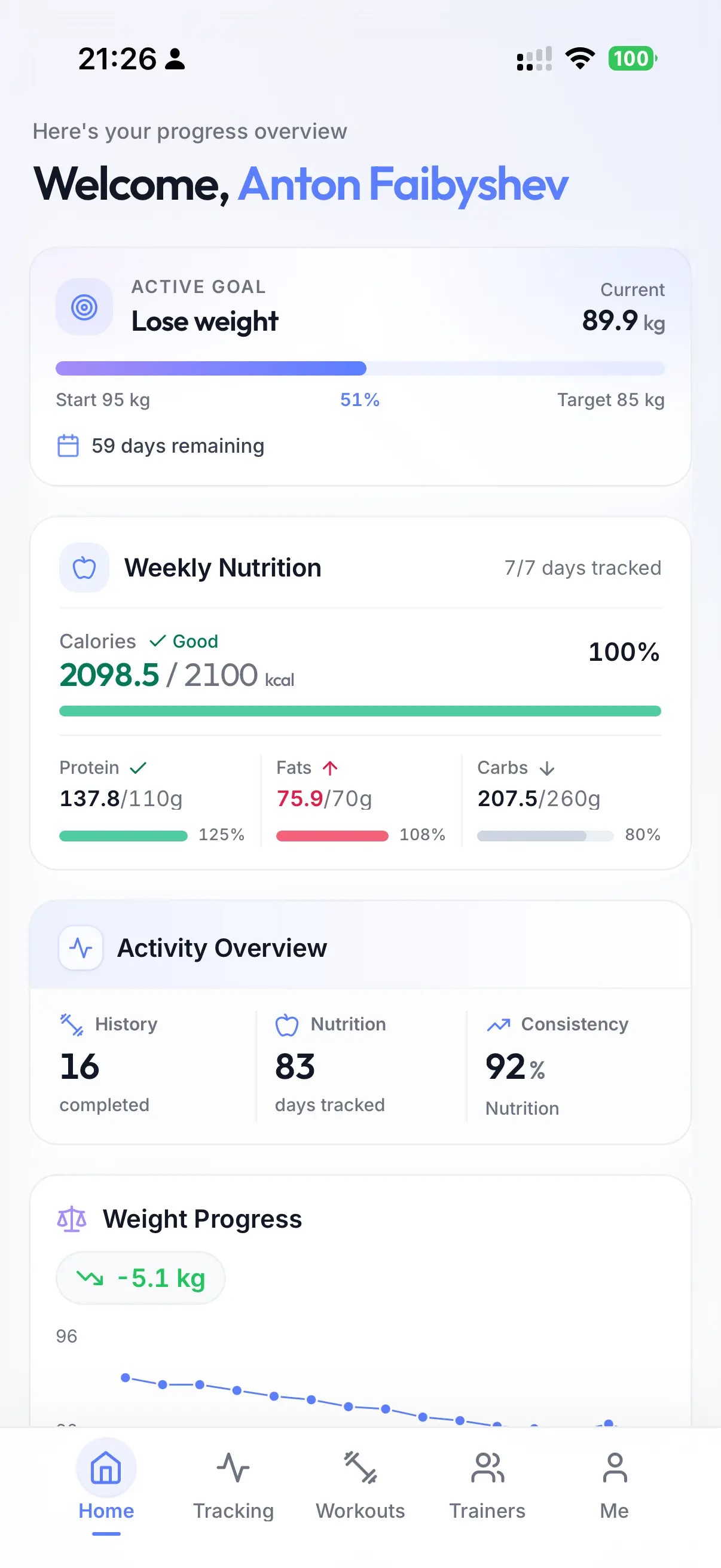
People often describe coaching as writing a better workout plan. Programming matters, but it is only one part of the job. A coach also needs to understand what the athlete completed, what changed over time, what was difficult, and whether the last decision produced the intended result.
More numbers do not automatically create that understanding. Context comes from connecting the plan with the athlete's actual record and then discussing the gaps.
An anonymized coaching workflow
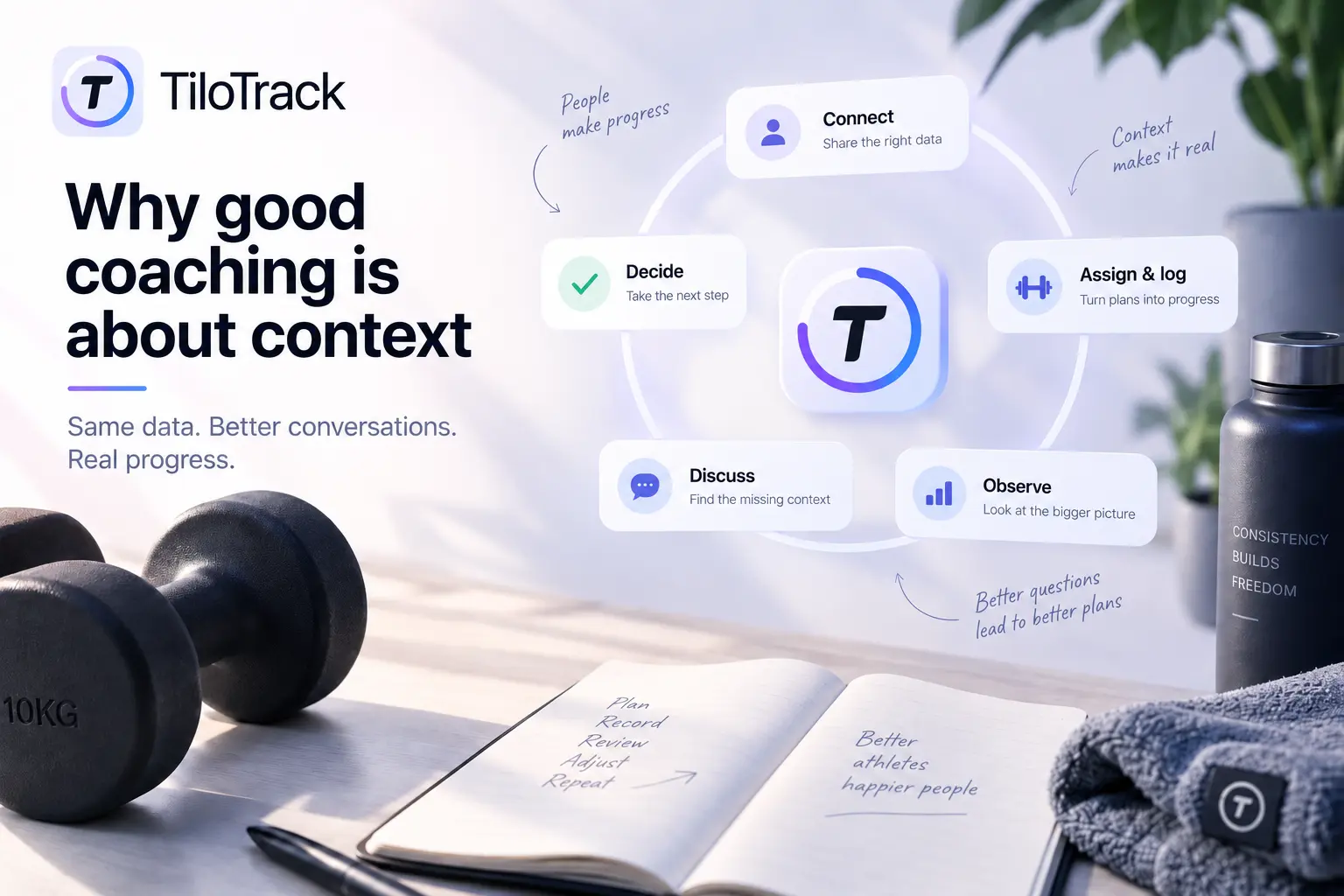
The workflow below is fictional and uses TiloTrack demo data; it does not describe a real customer or promise a particular outcome. It reflects the product loop we want every coaching decision to follow: connect, assign and log, observe, discuss, decide.
Step 1 - Connect. The athlete chooses to share the relevant progress record with a trainer. Sharing health-related data is relationship-specific and should remain under the athlete's control.
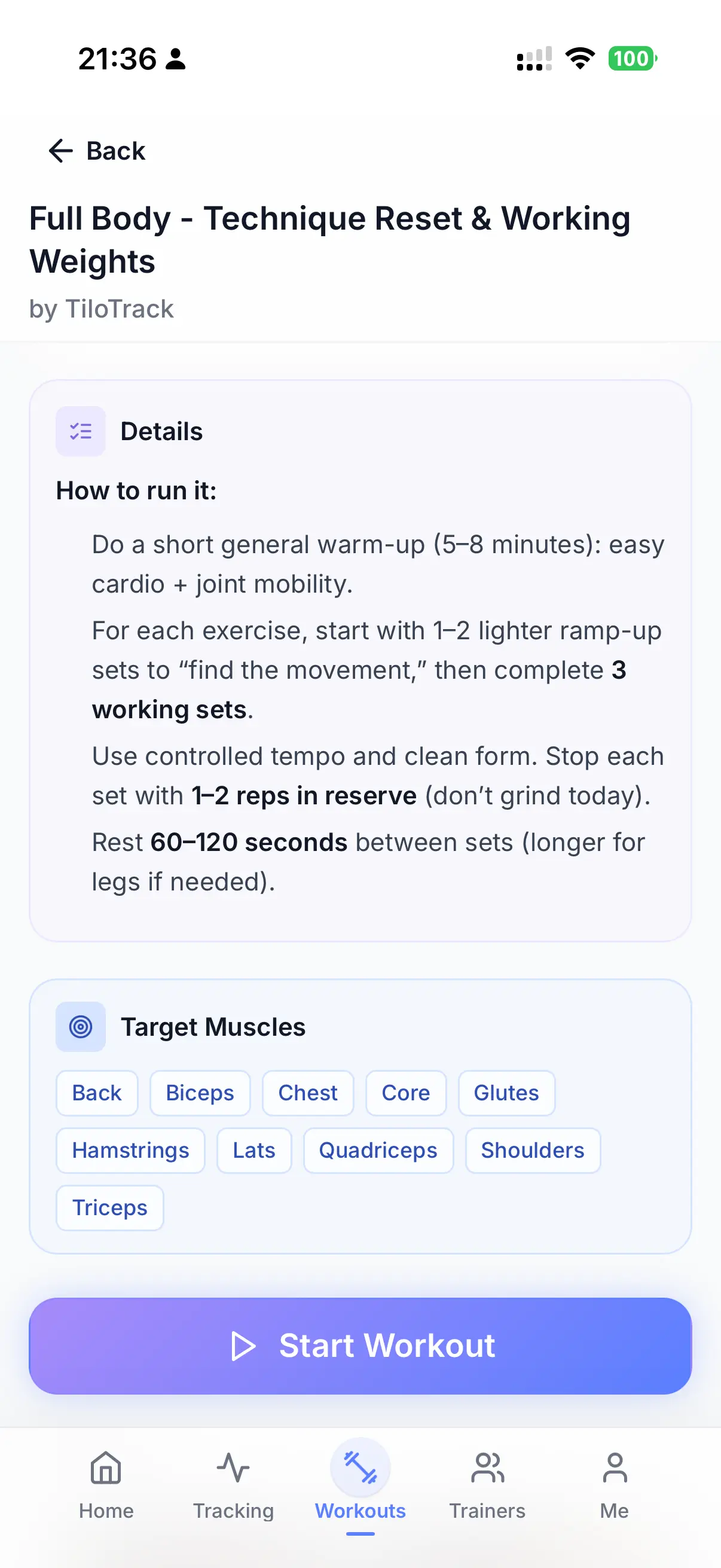
Step 2 - Assign and log. The trainer assigns a workout plan. The athlete records what was completed, while body measurements, nutrition tracking, and goals remain part of the same longer-term record.
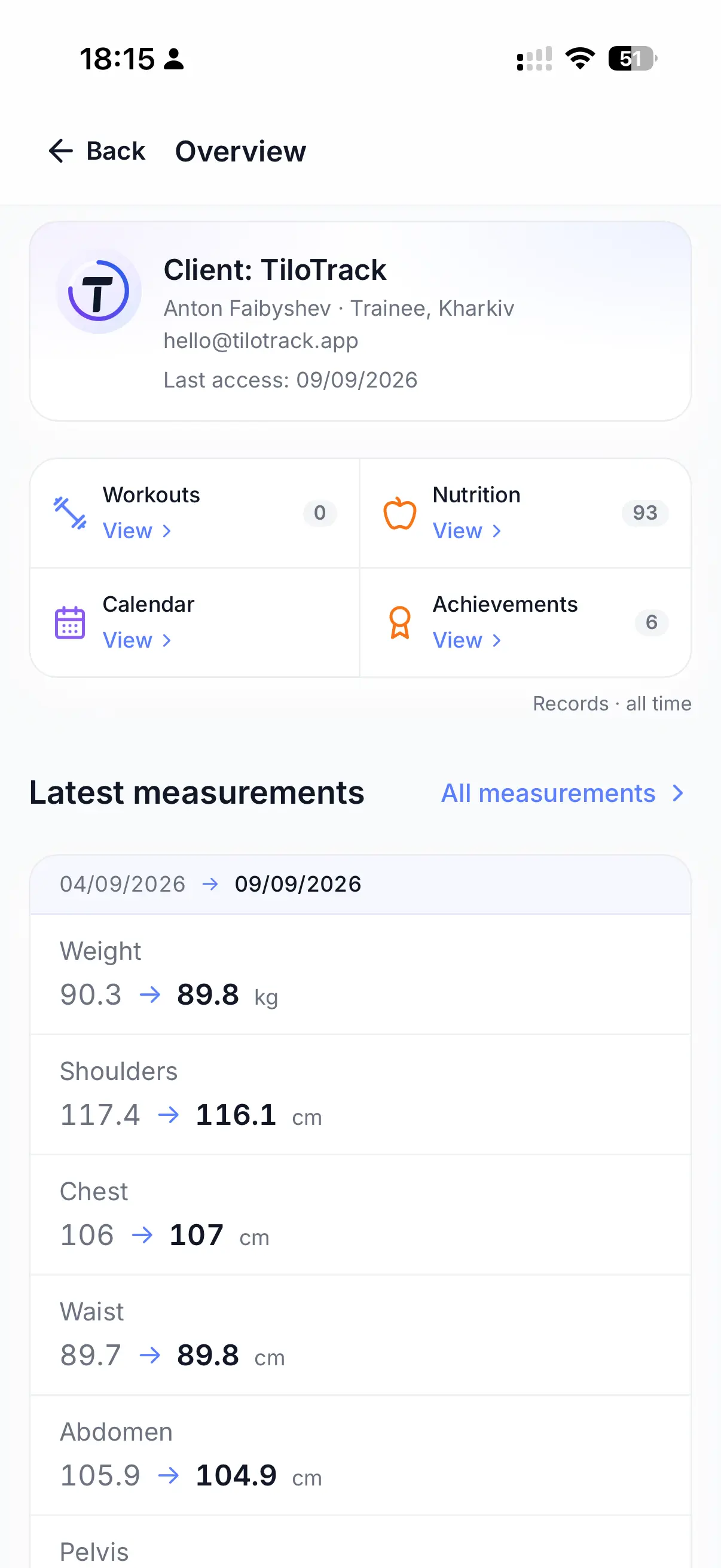
Step 3 - Observe. Before reacting to one disappointing session, the trainer selects a useful period and checks plan completion, recent measurement trends, nutrition consistency, and missing data. An absence of data is treated as a question, not as proof that the athlete did nothing.
Step 4 - Discuss. The trainer asks what the record cannot explain: Was the load too high? Was sleep different? Was a session skipped intentionally? That conversation may happen through the trainer's existing communication channel. TiloTrack does not need to pretend it owns every part of the relationship.
Step 5 - Decide. The trainer and athlete agree on the next action. If the plan needs to change, the trainer makes that decision and assigns the updated work. The software provides continuity; it does not make the coaching judgment.
What is available and what is next
Available now: athlete records across workouts, nutrition, measurements and goals, together with trainer connections and workout assignments. The screenshots on this page show product surfaces populated with demo data.
Next: a deeper trainer workspace and richer collaboration tools. Those are directions, not shipped claims. Until they exist, the honest product value is a shared record that helps both sides arrive at a better conversation with the same facts.
Questions before changing a plan
A useful review asks: What was assigned? What was actually completed? Over which period did performance or body data change? Are there enough records to call it a pattern? What context exists outside the app? What did the athlete and trainer decide, and when will they review that decision again?
Good coaching is not a dashboard full of certainty. It is a traceable loop between evidence, interpretation, a human decision, and follow-through. TiloTrack's role is to keep that loop coherent without replacing the people inside it.