Artificial intelligence is becoming part of almost every product, including fitness software. The easiest promise is that AI will decide what a person should do next. We think that is the wrong boundary for TiloTrack.
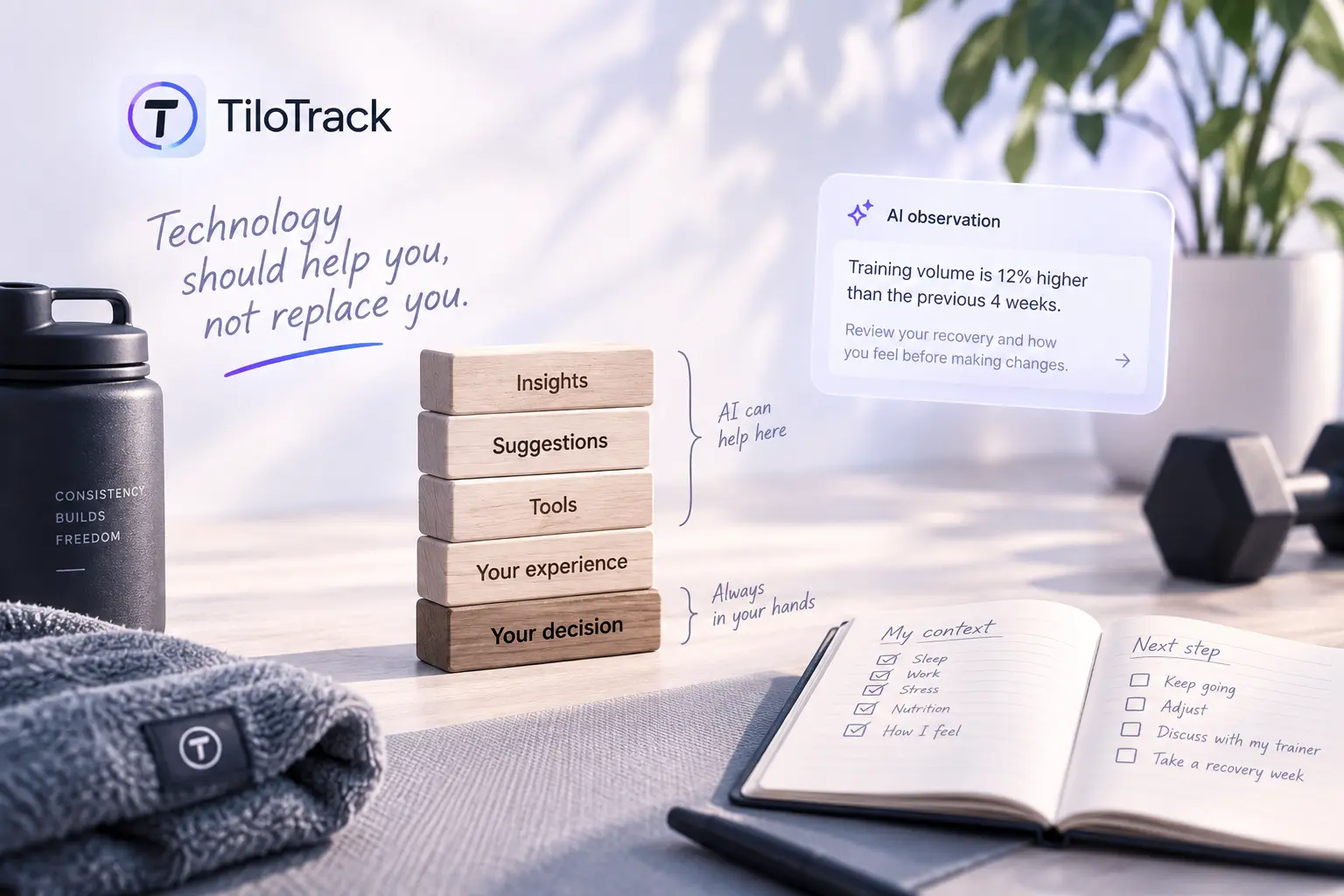
Our direction is narrower: technology may help athletes and trainers notice a pattern, but it should not disguise an inference as a fact, diagnose a condition, or change a training plan on its own.
Status: Vision, not a shipped coaching feature
The methodology on this page describes how we intend to evaluate future AI observations. It is not a claim that TiloTrack currently provides automated coaching, anomaly detection, or autonomous plan changes.
The five parts of a reviewable observation
1. Inputs. Name the records used, such as workout completion, nutrition entries, weight, or body measurements. An observation should never appear to know more than the data supplied to it.
2. Time window. State whether the comparison covers seven days, four weeks, or another period. A result without a time window is difficult to verify and easy to overinterpret.
3. Calculation. Show the simple transformation behind the statement - for example, a seven-day average compared with the previous seven-day average. When a deterministic calculation is enough, it should not be presented as AI magic.
4. Missing data and uncertainty. Unlogged days must remain missing. They must not silently become zero calories, zero body weight, or completed workouts. Limited coverage should make the wording less confident.
5. Decision boundary. Finish with a review prompt, not an order. The athlete and trainer decide what the observation means and whether any action is appropriate.
A concrete demo example
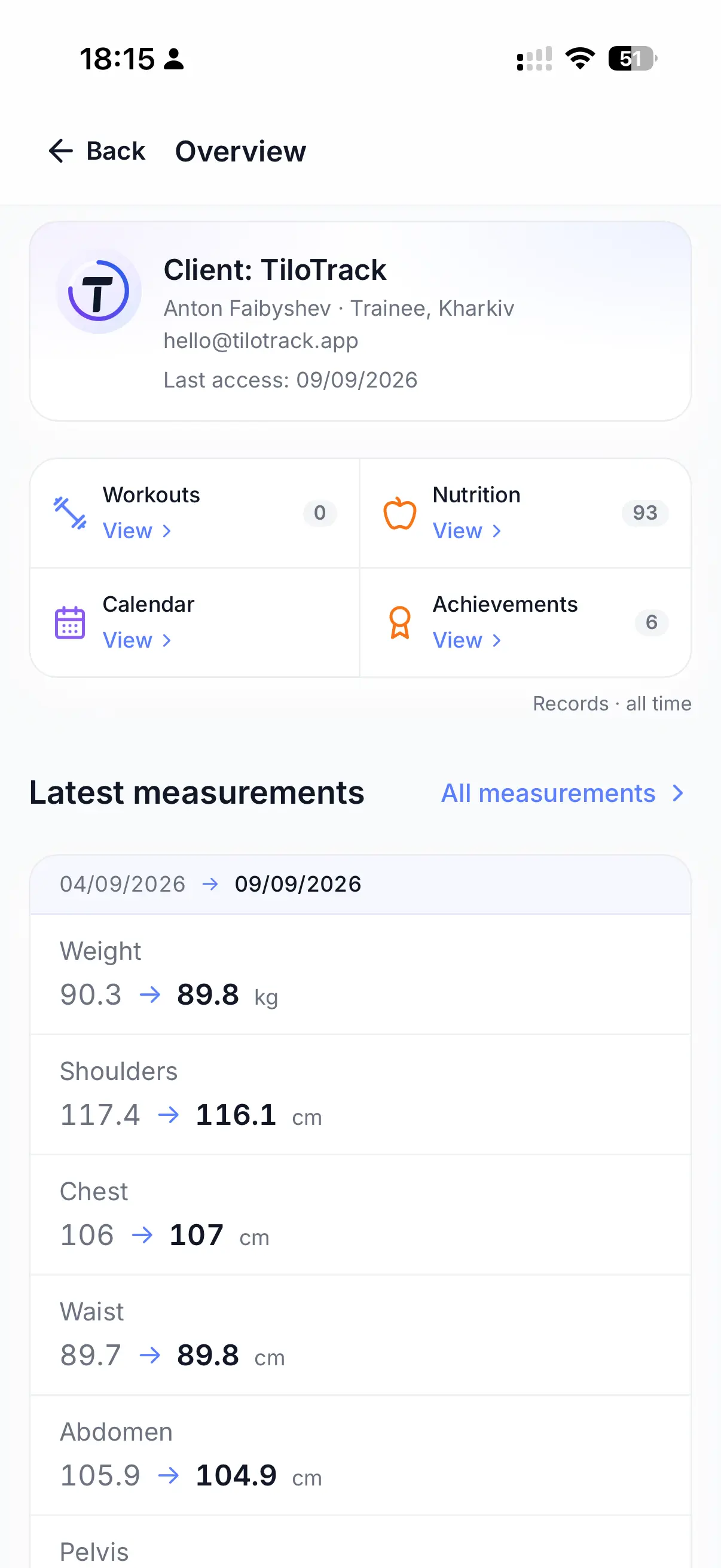
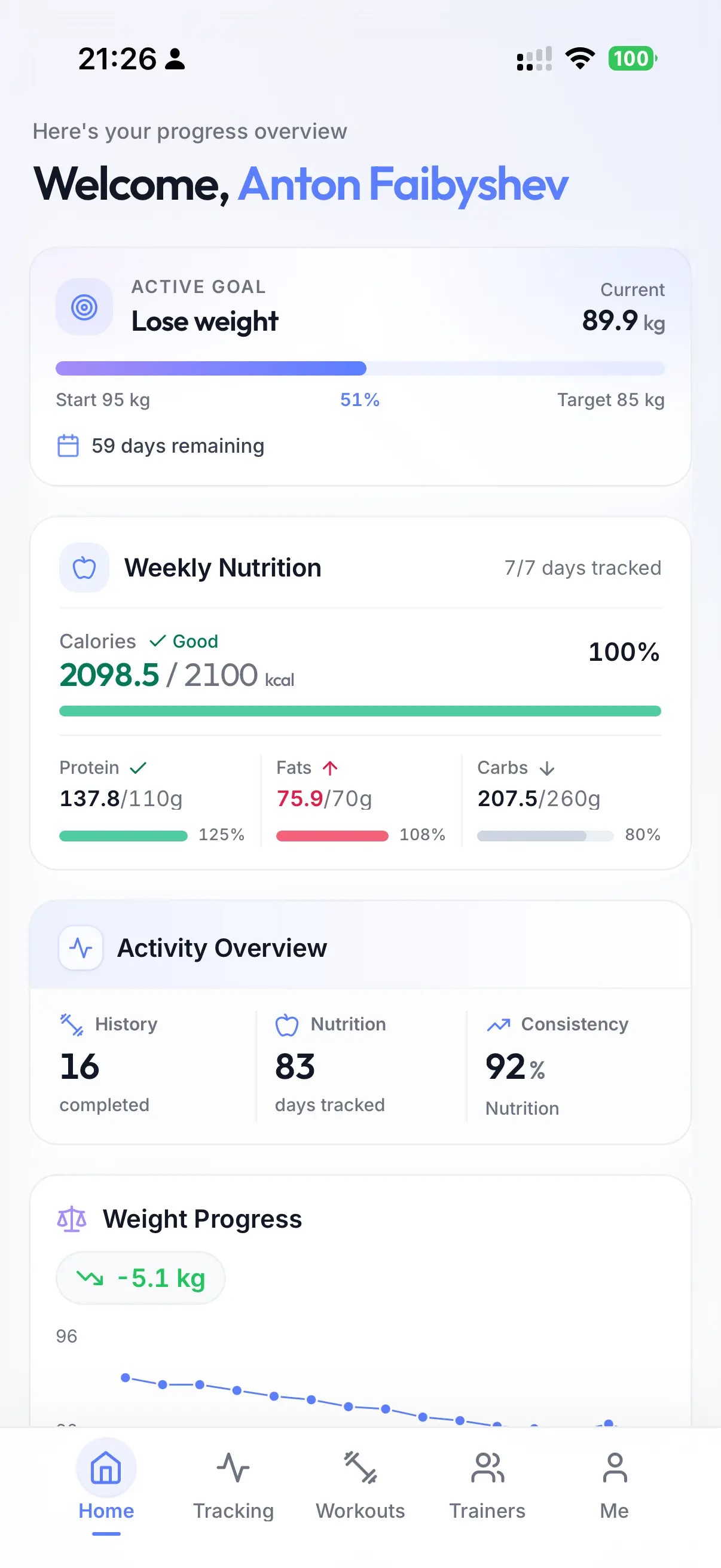
Imagine a 90-day demo record with a 2,100 kcal daily target, occasional higher-calorie weekends, and two or three missing nutrition days per month. A transparent observation could say: “Across the six fully logged days this week, the recorded daily average was below the selected target. One day has no entry. Review the missing day and the wider trend before drawing a conclusion.”
A poor version would say: “You stayed within your nutrition plan, so your weight should fall.” It hides the missing day, turns correlation into causation, and predicts an outcome the record cannot guarantee.
The same discipline applies to training. “Three of four assigned sessions were recorded as completed in the selected week” is verifiable. “Your motivation is falling” is an interpretation that requires a conversation.
Better questions, not automatic answers
Sometimes the most useful output is a question: Did the athlete intentionally take a recovery week? Did the logging routine change? Is the selected comparison period representative? Does the athlete's own account agree with the visible pattern?
For health-related patterns, the boundary must be even clearer. TiloTrack is not a medical service. Software should not diagnose recovery problems or replace advice from a qualified professional.
Our test for future AI features
Before treating an AI observation as product-ready, we should be able to answer: Can the user inspect the source records? Is the time window explicit? Are missing inputs visible? Is observation separated from explanation? Can the user dismiss or correct it? Does a human remain responsible for the next step?
If the answer to any of those questions is no, the feature is not ready. That is what “technology should help you, not replace you” means in practice: show the work, preserve uncertainty, and keep people in control.