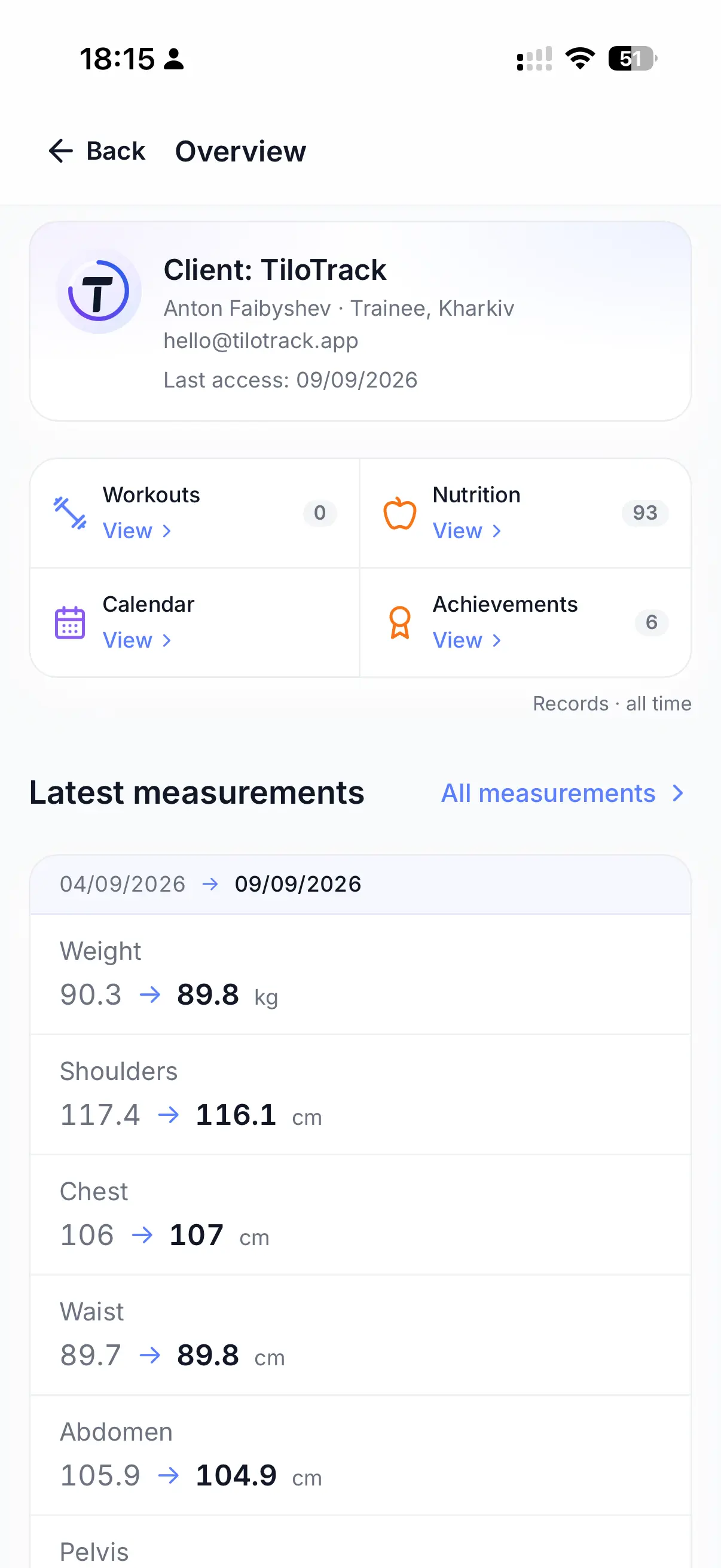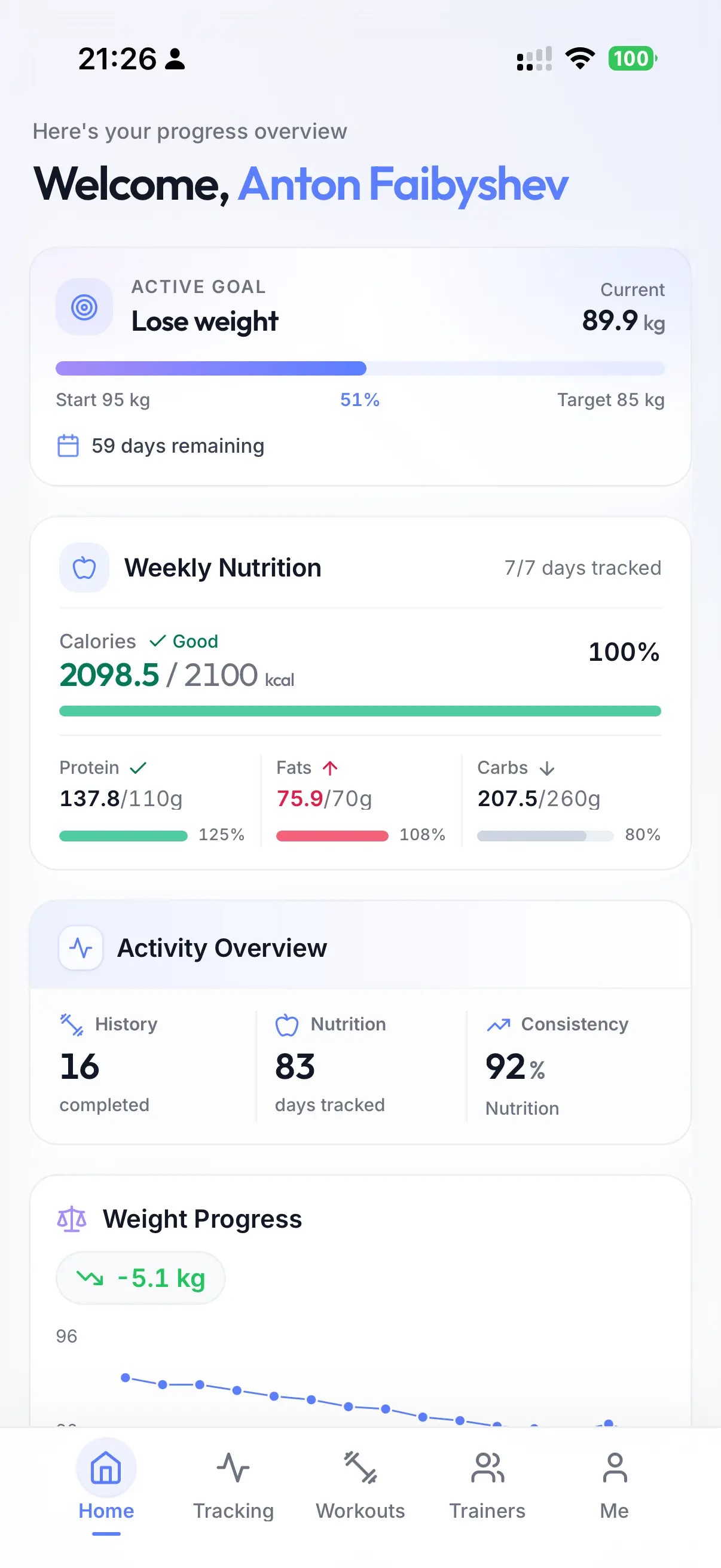
Most fitness apps ask you to track one thing well: a workout, calories, weight, or steps. Each record can be useful, but progress does not happen in isolated pieces. A hard training week may affect body weight. A missed session may be part of a recovery decision rather than a loss of motivation. One measurement without the surrounding weeks can create more anxiety than clarity.
At TiloTrack, our working principle is simple: more data is not automatically better; connected context is. The purpose of a progress record is to make the next human decision calmer and better informed.
How we review a progress period
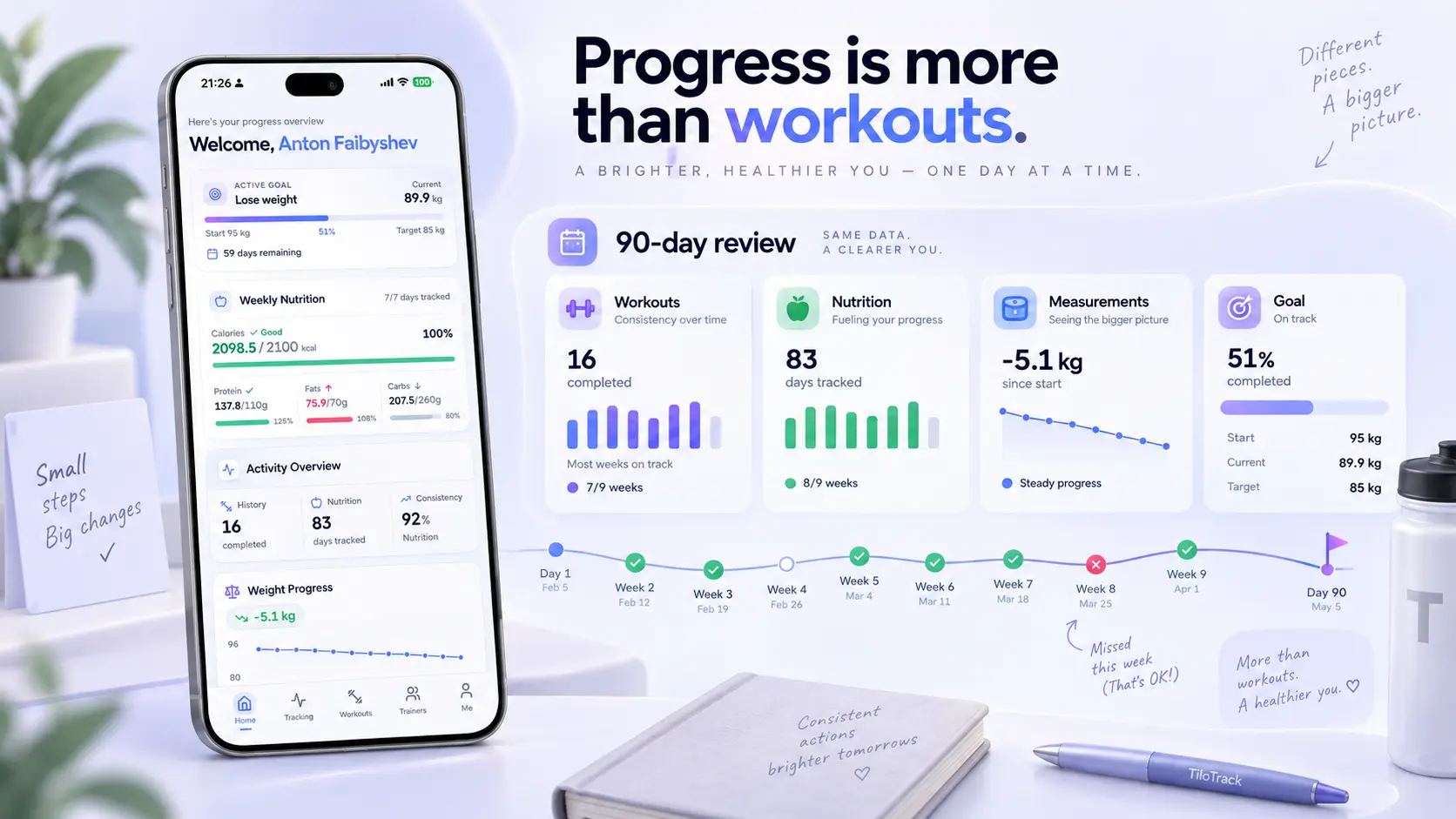
We start with a fixed time window instead of whichever day feels most dramatic. For the demo workflow below, the window is 90 days. We compare four inputs that are already part of the TiloTrack product model: completed workouts, nutrition records, body measurements, and the athlete's stated goal.
The review cadence matters. Body measurements are useful when collected under reasonably similar conditions and viewed weekly, not when checked repeatedly during the day. Nutrition is reviewed as a weekly pattern, because one high-calorie Saturday does not describe the whole week. Workout completion is read alongside the planned sessions, including missed days rather than quietly deleting them.
A transparent demo example
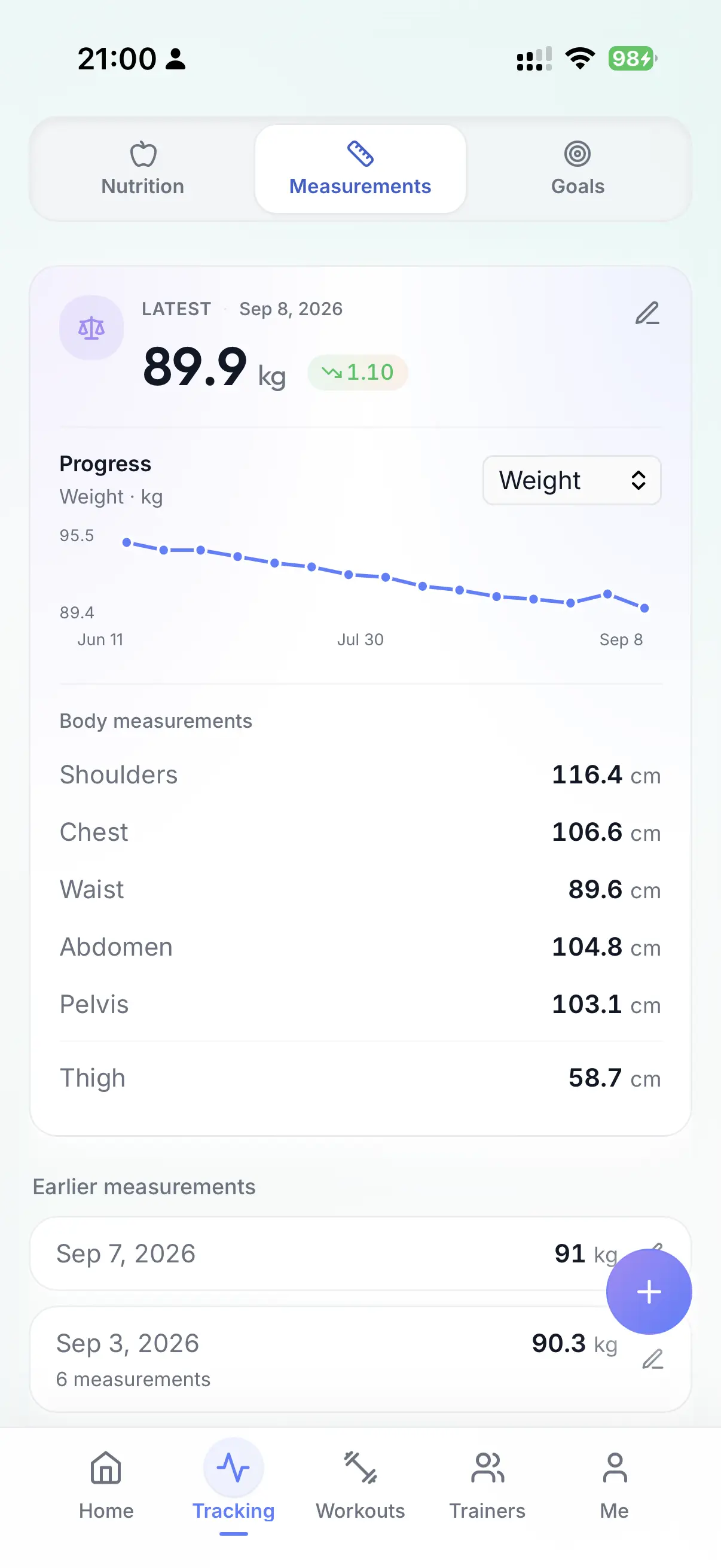
Consider a fictional athlete whose goal is to move gradually from 95 kg toward 85 kg. The demo record contains weekly measurements, a daily nutrition target of 2,100 kcal, occasional weekends near 3,000 kcal, and two or three unlogged days in a month. Workouts and measurements are not perfectly regular - because real routines rarely are.
A useful review does not label the weekends as failure. It asks whether the weekly nutrition average remained below the target, whether the weight trend changed across several weeks, whether measurements moved in the same direction, and whether training consistency was stable enough to interpret the period. Missing entries stay visible as missing; they are not treated as zero calories or a completed workout.
This example is demo data, not a customer result and not evidence that one input caused another. It demonstrates the review method: choose a period, keep gaps visible, compare related records, and separate observations from explanations.
What the record can - and cannot - tell you
The record can show that weight changed while a weekly nutrition average and workout completion followed a particular pattern. It can show that measurements remained stable despite a noisy daily scale. It can help an athlete or trainer find the exact weeks worth discussing.
It cannot diagnose why a change happened. Sleep, illness, medication, hydration, stress, and many other factors may not be recorded. TiloTrack is not a medical service, and a chart should not be used as a diagnosis.
A practical review loop
First, choose the time window before looking for a conclusion. Second, check whether enough entries exist to compare the weeks fairly. Third, describe what changed without inventing a cause. Fourth, add the athlete's context. Finally, let the athlete or trainer decide whether the next plan needs to change.
That is the longer view we are building TiloTrack around: workouts, nutrition, measurements, and goals forming one understandable record, while the person - not the dashboard - remains responsible for the decision.